Research

Research on conflict, information, and credible evidence.

Publications, books, working papers, and projects in progress from the current CV, with public links included where available.

Peer-reviewed publications, reports, working papers, and current projects.

Use the filters to narrow the list by publication stage. DOI links are shown where available.

Showing all research items.

Published 2026

AI-assisted teams outperform AI-led teams but not human-only teams in assessing research reproducibility in quantitative social science

With A. Brodeur, D. Valenta, A. Marcoci, D. Mikola, B. Barbarioli, et al.

Proceedings of the National Academy of Sciences, 123(22), e2524747123

Peer-reviewed publication

DOI: 10.1073/pnas.2524747123

288 researchers in 103 teams reproduced published social science with no AI, AI assistance, or AI in the lead: human-only and AI-assisted teams reproduced 94% and 91% of results, AI-led teams only 37%.

Expert human judgment is still indispensable for verification — but a 37% autonomous rate suggests AI can help where human review doesn't scale.

Applied AIReproducibilityMeta-science
Working papers 2023

Peacefully Demobilizing Rebels: Identity, Emotional Cues, and the FARC

With Michael Jetter and Christopher Parsons

IZA Discussion Paper No. 16054

Under journal review (IZA Discussion Paper)

Radio messages aired during national-team football matches persuaded FARC fighters to demobilize: family-themed appeals brought home more than 1,000 rebels, while national-unity appeals did not.

Persuasion worked when identity and emotional cues aligned — messages landed hardest right after unexpected losses.

ConflictIdentityBehavioral
Published 2022

Captivating news: Media attention and FARC kidnappings

With Michael Jetter

Journal of Economic Behavior & Organization, 202, 69-81

Peer-reviewed publication

DOI: 10.1016/j.jebo.2022.07.029

News coverage of a proposed prisoner exchange shifted FARC kidnappings away from ransom targets and toward political hostages the group could trade.

Media attention itself — not slant or new information — changed the strategic value of targets, also raising killings of politicians while reducing other attacks.

ConflictMediaPolitical economy
Published 2026

Comment on "Telementoring and Homeschooling during School Closures: A Randomized Experiment in Rural Bangladesh" by Hassan et al.

With Nikolai Cook, Derek Mikola, Ole Rogeberg, David Valenta, Michael Wiebe, Carl Bonander, and Abel Brodeur

The Economic Journal, 2026

Journal comment

DOI: 10.1093/ej/ueag040

Re-examines the replication package of a randomized telementoring experiment in rural Bangladesh and documents data irregularities, including 132 participants shared with a second experiment.

Published in The Economic Journal alongside the original study, so readers see the replication check next to the paper itself.

ReproducibilityEducationRCTs
Working papers 2025

A Comment on "Delivering Remote Learning Using a Low-Tech Solution: Evidence from a Randomized Controlled Trial in Bangladesh"

With Lenka Fiala, Jack Fitzgerald, Essi Kujansuu, Derek Mikola, David Valenta, Michael Wiebe, Matthew D. Webb, and Abel Brodeur

I4R Discussion Paper Series

I4R Discussion Paper

Re-examines the data, code, and robustness of a randomized low-tech remote-learning intervention in Bangladesh.

Replication checks translate into practical lessons about which education results to build on.

ReproducibilityEducationDevelopment
Working papers 2025

The Wrong Snowball: Reintegration Signals and Demobilization in Colombia

With Verónica Abril

Working paper

Working paper; draft available on request

When demobilized ex-combatants opened state-funded businesses, nearby demobilizations fell — about 734 fewer over three years, or 5.1 percent of FARC demobilizations in 2005-2016.

Reintegration's visibility can backfire: when post-exit life looks fragile or unsafe, each public milestone discourages the next defector.

ConflictReintegrationPolitical economy
Working papers 2025

You Speak, We Shoot: On the Unintended Consequences of Community Radios on Colombia's Violent Conflict

With Gustavo Canavire-Bacarreza and Eric Neumayer

Working paper

Under journal review

Introducing community radios in Colombia increased killings by right-wing paramilitaries (AUC) but not by the FARC — and FARC violence even fell over time in more left-leaning municipalities.

Giving communities a public voice threatened the armed group whose control it challenged: media interventions can backfire where violent actors dominate.

MediaConflictColombia
Work in progress 2025

Violence and Migration: Analyzing the Mujahideen

With Christopher Parsons

Project in progress

Work in progress

Tracks mujahideen commanders through geocoded event data to ask when fighters relocate as violence intensifies.

Relocation seems to respond to how violence is changing, not just how high it is — which matters for predicting displacement.

ConflictMigrationGeocoded data
Work in progress 2025

Polarization in Democratic Elections: Insights from an Enhanced Hotelling's Model

Work in progress

Project in progress

Work in progress

Extends Hotelling's framework to multi-candidate systems and studies when more candidates increase polarization.

Shows how electoral entry can raise the probability that extreme candidates win.

Political economyTheoryElections
Books and reports 2022

Estrategias anticontrabando y crimen organizado

Universidad EAFIT and Federación Nacional de Departamentos; consulting engagement led by Juan P. Aparicio

EAFIT & Federación Nacional de Departamentos

Book

Policy-facing analysis of illicit liquor and tobacco markets and organized-crime dynamics.

Combines market characterization with institutional constraints to inform enforcement strategy.

CrimePolicyMarkets
Published 2016

Demanda de internet: el sector mayorista de telecomunicaciones colombiano (Internet Demand: The Colombian Wholesale Telecommunications Sector)

With John J. García Rendón

Revista de Economía del Rosario, 19(2), 2016

Peer-reviewed publication

DOI: 10.12804/revistas.urosario.edu.co/economia/a.5624

Estimates how demand for wholesale internet in Colombia responds to prices and income, using firm-level dynamic panel data.

Early applied work on market structure, demand, and digital infrastructure.

Industrial organizationTelecomDemand

Applied questions, transparent workflows.

Across my projects, the common thread is how people — rebels, voters, editors, researchers — react to information. I usually pair detailed administrative or event data with natural experiments, and my reproducibility work asks how research claims can be checked at scale.

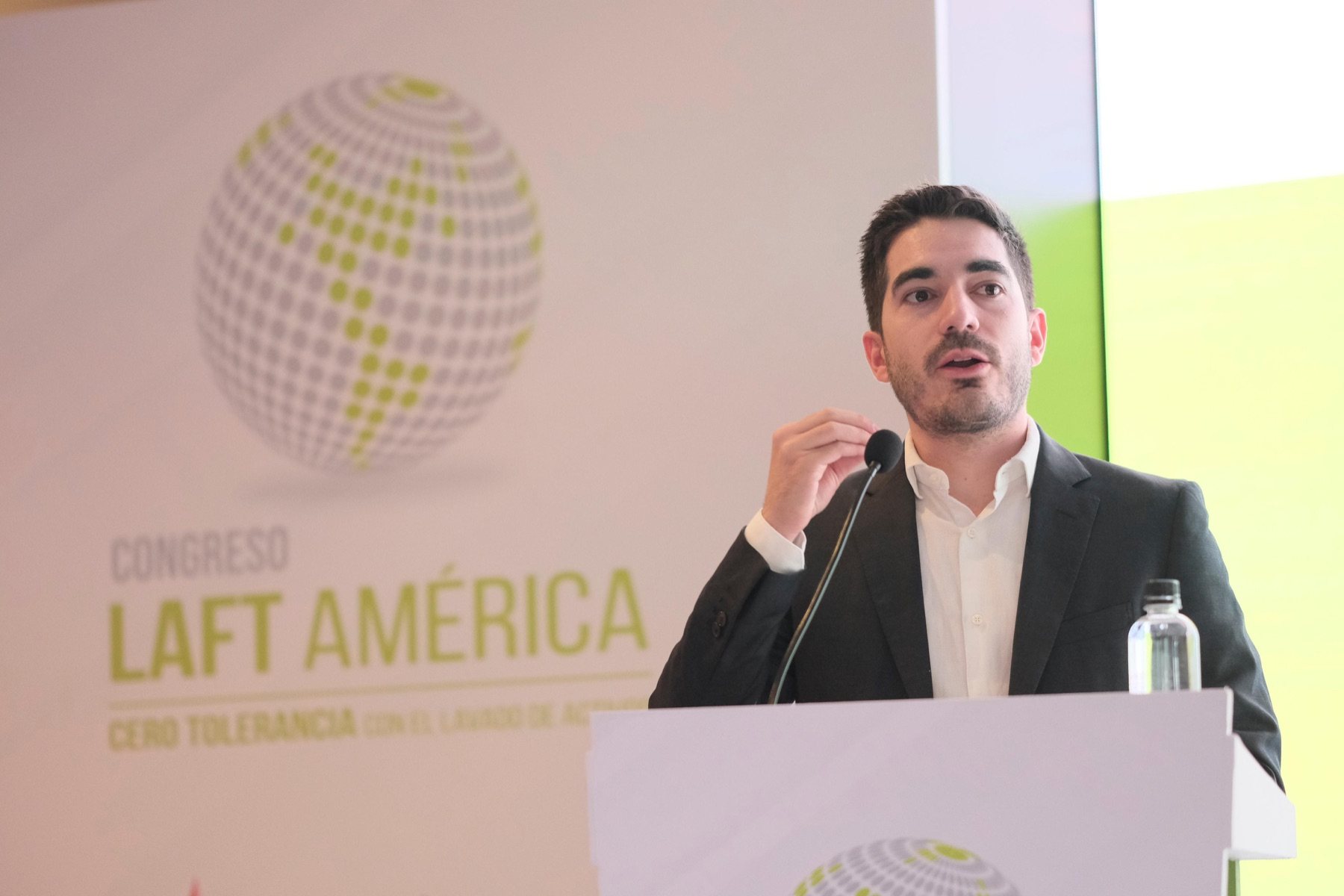
Juan P. Aparicio speaking at a research event